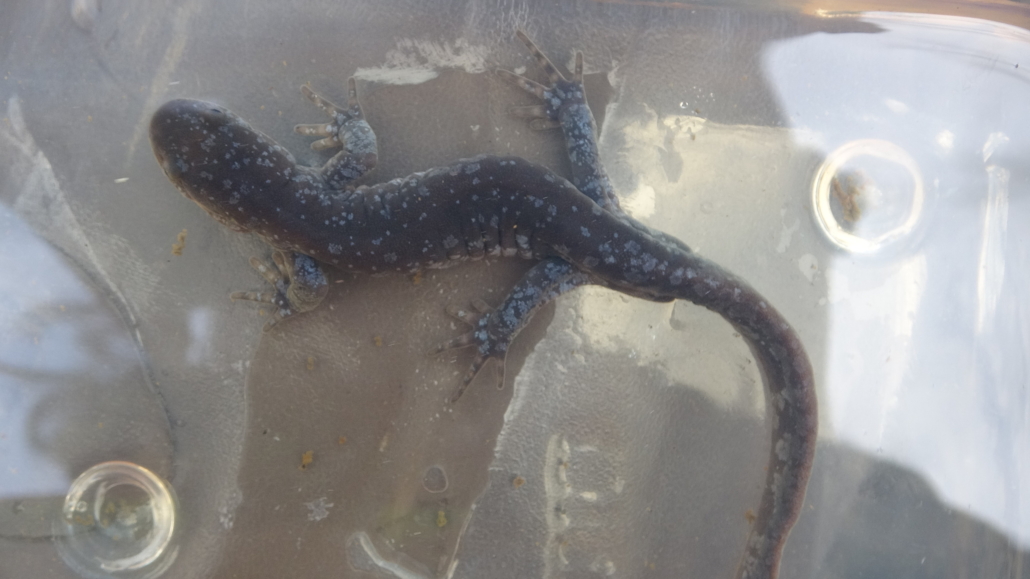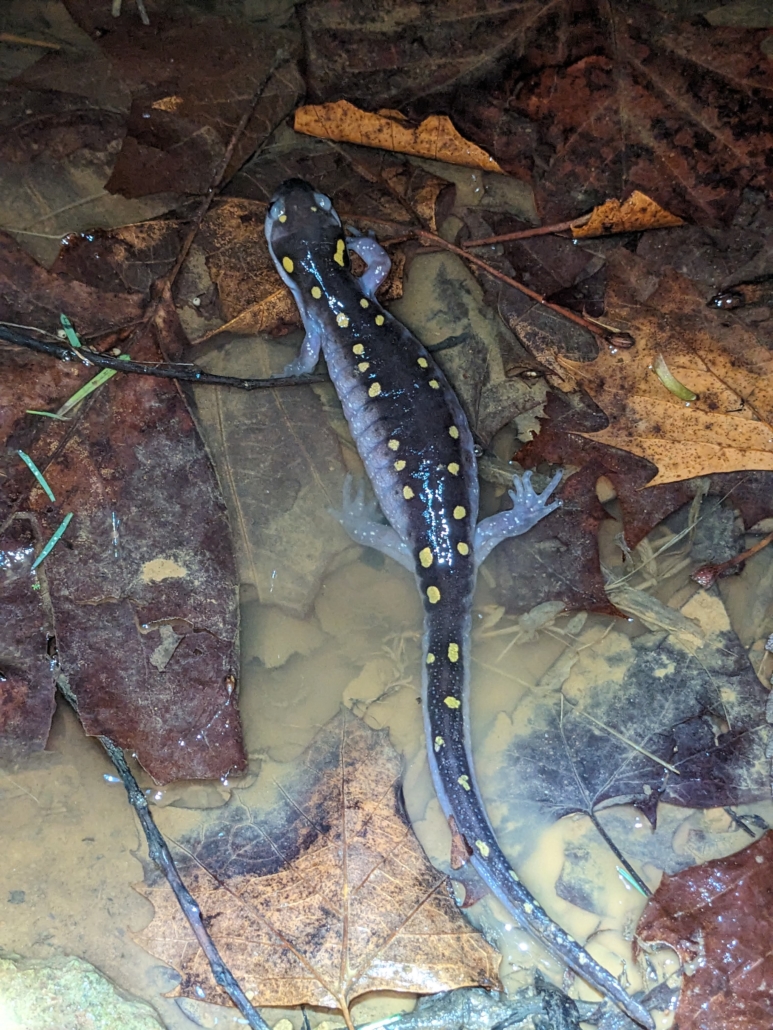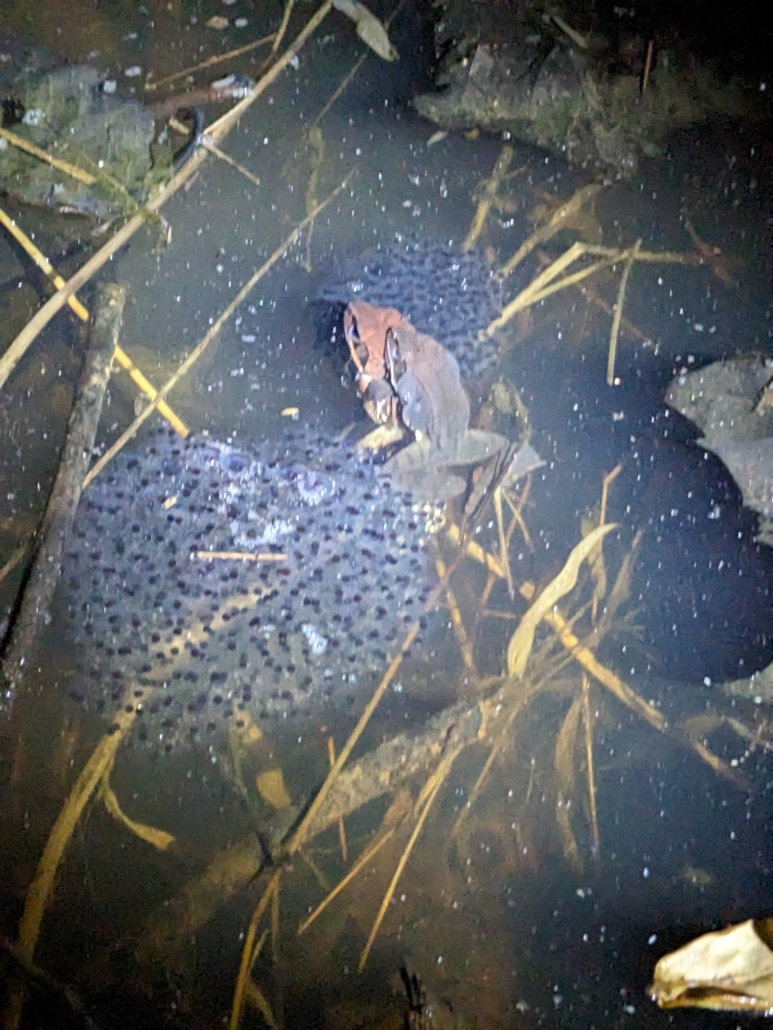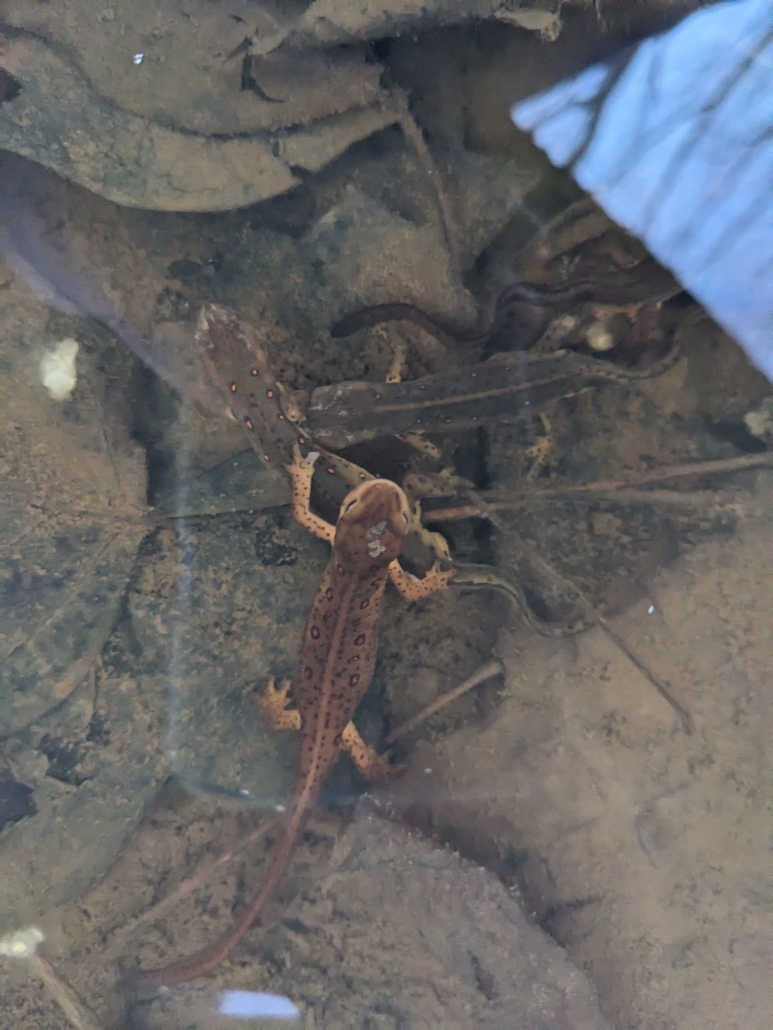
Every spring across the eastern United States a great migration takes place. But the creatures are small and they move under cover of darkness, so many people never see them at all. They are Spotted Salamanders and Jefferson Salamanders, who spend the winter in holes in burrows under the forest floor. Then, on the first warm rainy night of spring, they walk a few hundred yards to small pools of water where they will find each other, mate, lay eggs, and leave again before their babies hatch. Their jelly-like egg masses are tasty food for fish and other predators, so the salamanders rely on pools where fish and other aquatic animals can’t survive because they dry up in summer. These are called vernal pools or ephemeral pools.
Here at Clifton we have seven vernal pools. We have been making casual observations of our vernal pools for years, but in 2023 we started a long-term monitoring project to take quantitative data on our vernal pools and their residents over time. We want to answer the following questions:
1. Are our vernal pools changing over time and if so, how?
2. What kinds of vernal pools do amphibians prefer to lay their eggs in?
To answer those questions, we have enlisted the help of hundreds of children, college students, and adults to take data on the number of egg masses, water temperature, water pH, and water clarity as often as we can each spring.
This year we haven’t had a lot of rain, so the vernal pools are already drying up and the monitoring season is coming to a close. With the dry weather, some of our pools haven’t even had enough water for the amphibians to lay eggs. While three years of data may sound like a lot, one of the main lessons we have learned is that we will need several more years of data before we are able to say whether the year-to-year changes we are observing are part of a trend or just normal variation.
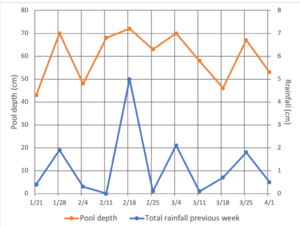
A more concrete lesson can be gleaned by comparing the depth of the vernal pools to rainfall data that has also been collected on the property. As shown in the graph, it takes about 2 centimeters of rainfall in a week to keep the pool we call Trifecta 1 full. Any less than that and the water level starts to drop. So it’s not just about total rainfall, but consistent rain throughout the spring.
If you or any students in your life would like to work through some other data from the project you can find a worksheet here.
Thank you to all the students and volunteers who have helped us collect these data! We are looking forward to seeing what we can learn in the next three years.